
Variable-Speed & Inverter HVAC Systems for Glynn County Homes
Steady indoor temperatures, superior humidity control, whisper-quiet operation, smart thermostat integration, and durable coil protection—built for long-term comfort and lower monthly power bills.
What Is a Variable-Speed System?
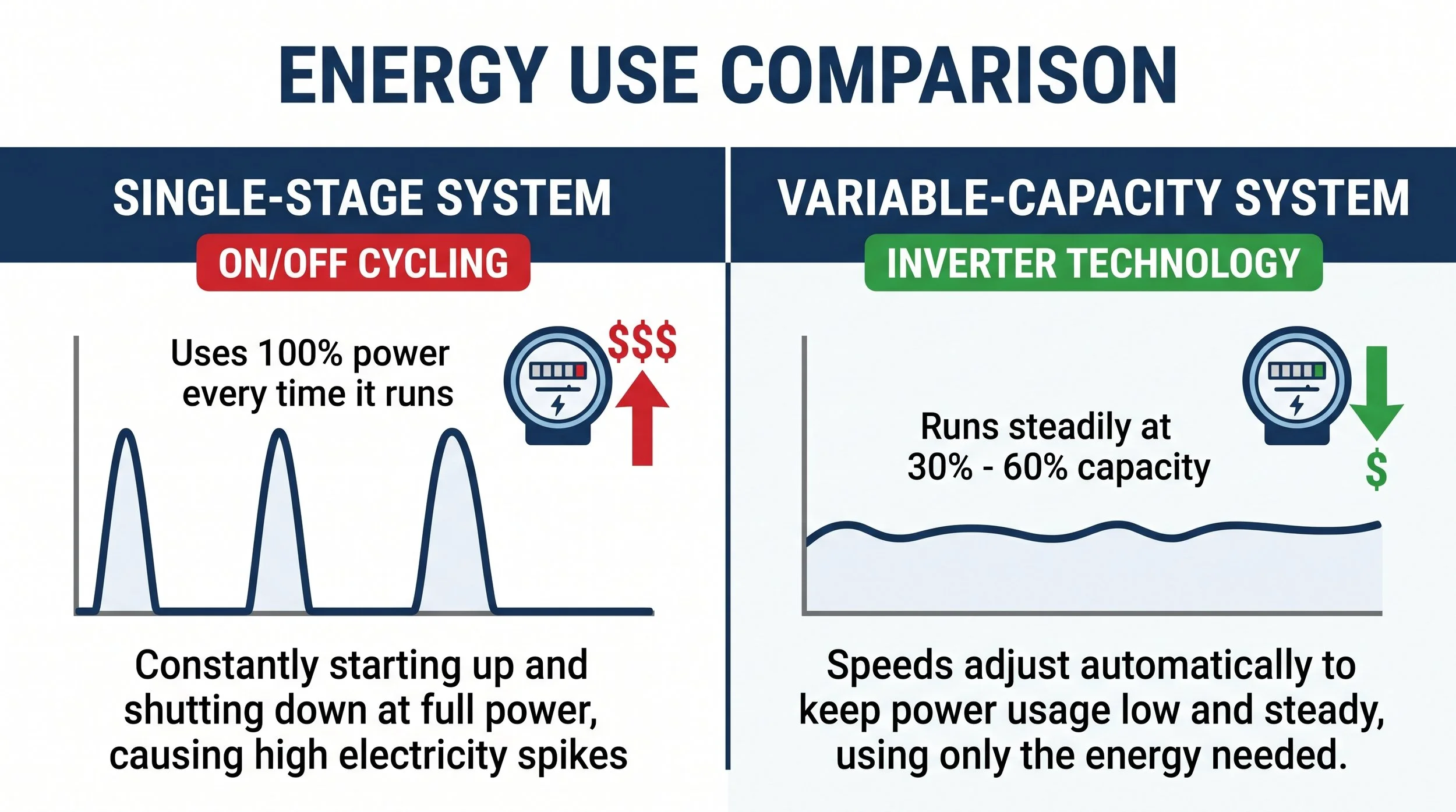
Most older air conditioners and heat pumps operate like a standard light switch: they are either completely off or running at 100% blast. Every time your home warms up a couple of degrees, the compressor kicks on at full power, runs hard, and shuts right back off.
A variable-speed (or variable capacity) inverter system works more like a dimmer switch or cruise control in a car. Instead of running at full tilt all day, the compressor and blower automatically adjust their output in small increments—often running at 30% to 60% capacity—to match the exact heating or cooling your home needs at that moment.
Open 7 Days a Week (8:00 AM – 8:00 PM)
Upfront Pricing Before Any Work Begins
Fully Licensed in Georgia & Florida
📞 Call (912) 242-2721 — Speak to the Owner
🛡️Fully Licensed & Insured ⭐ 5.0 Star Rating
📍Locally Owned & Operated 💰 Transparent Pricing

Superior Humidity & Latent Load Control (No More "Clammy" Air)
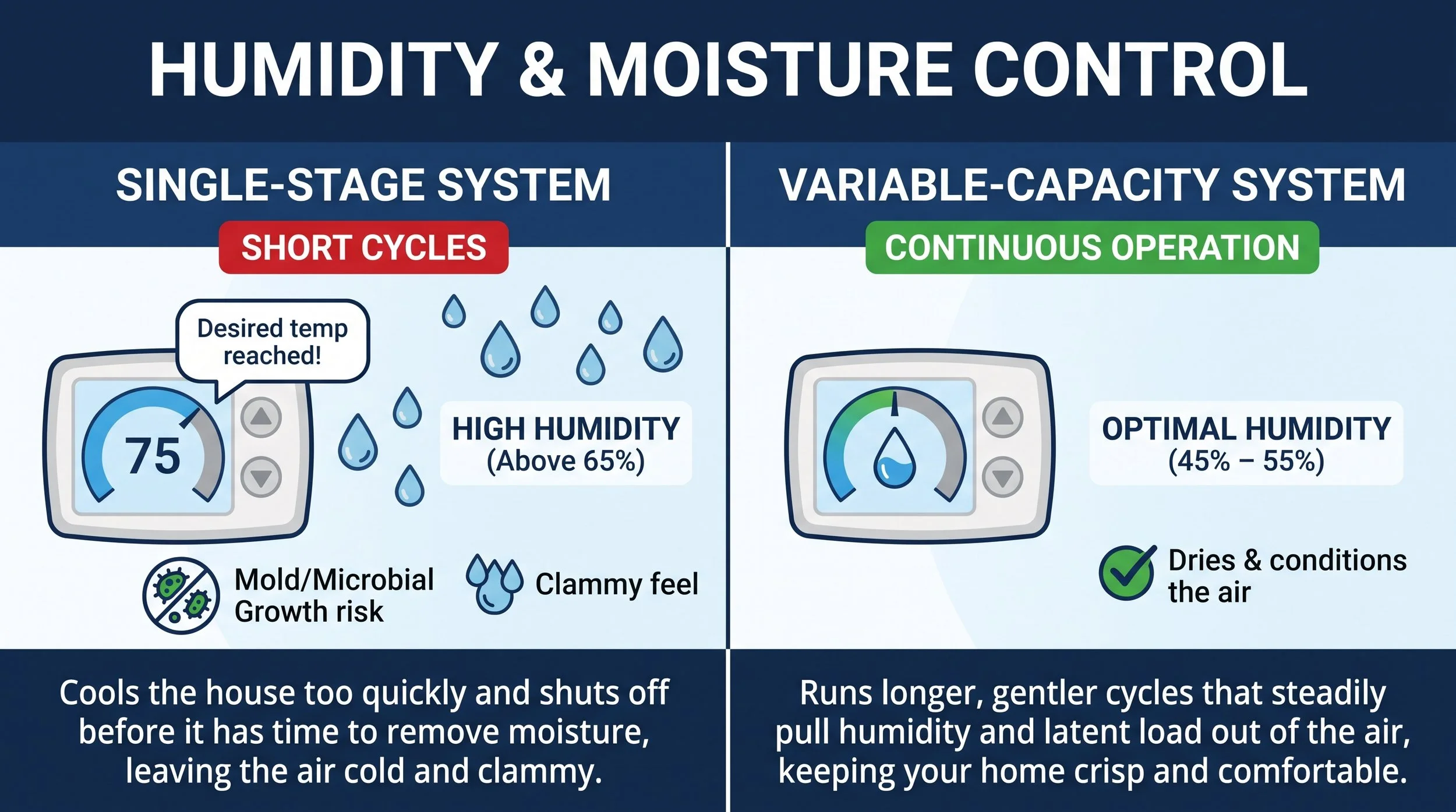
Comfort isn't just about the number on your thermostat. Your HVAC system actually handles two different types of heat: sensible load (the dry air temperature you feel) and latent load (the hidden moisture and humidity suspended in the air).
Traditional single-stage units often cool the air too fast, satisfy the thermostat in a short burst, and shut off before they have had enough runtime to pull moisture out of the house. That is why a home can read 70°F on the wall and still feel cold, sticky, and "clammy."
Variable-speed systems solve this by running longer, gentler cycles at lower capacities. Keeping air moving steadily across a cold indoor coil removes significantly more latent load without overcooling your rooms.
The Ideal Target: Most homes feel their crispest and most comfortable between 45% and 55% relative humidity.
Why It Matters for Your Home: When indoor relative humidity consistently climbs above 65%, it creates the conditions where mold and microbial growth can begin—leading to musty odors, damp surfaces, and potential air quality issues. Consistent latent load control keeps your indoor environment safely below that threshold.
Why Homeowners Are Making the Switch
No More Temperature Swings: Because the system makes continuous micro-adjustments, it holds your thermostat setting within a fraction of a degree and helps eliminate frustrating hot and cold spots from room to room.
Lower Monthly Power Bills: Starting a traditional compressor from a dead stop draws a massive spike of electricity. Running at lower, steady speeds uses significantly less energy over the course of a Georgia summer.
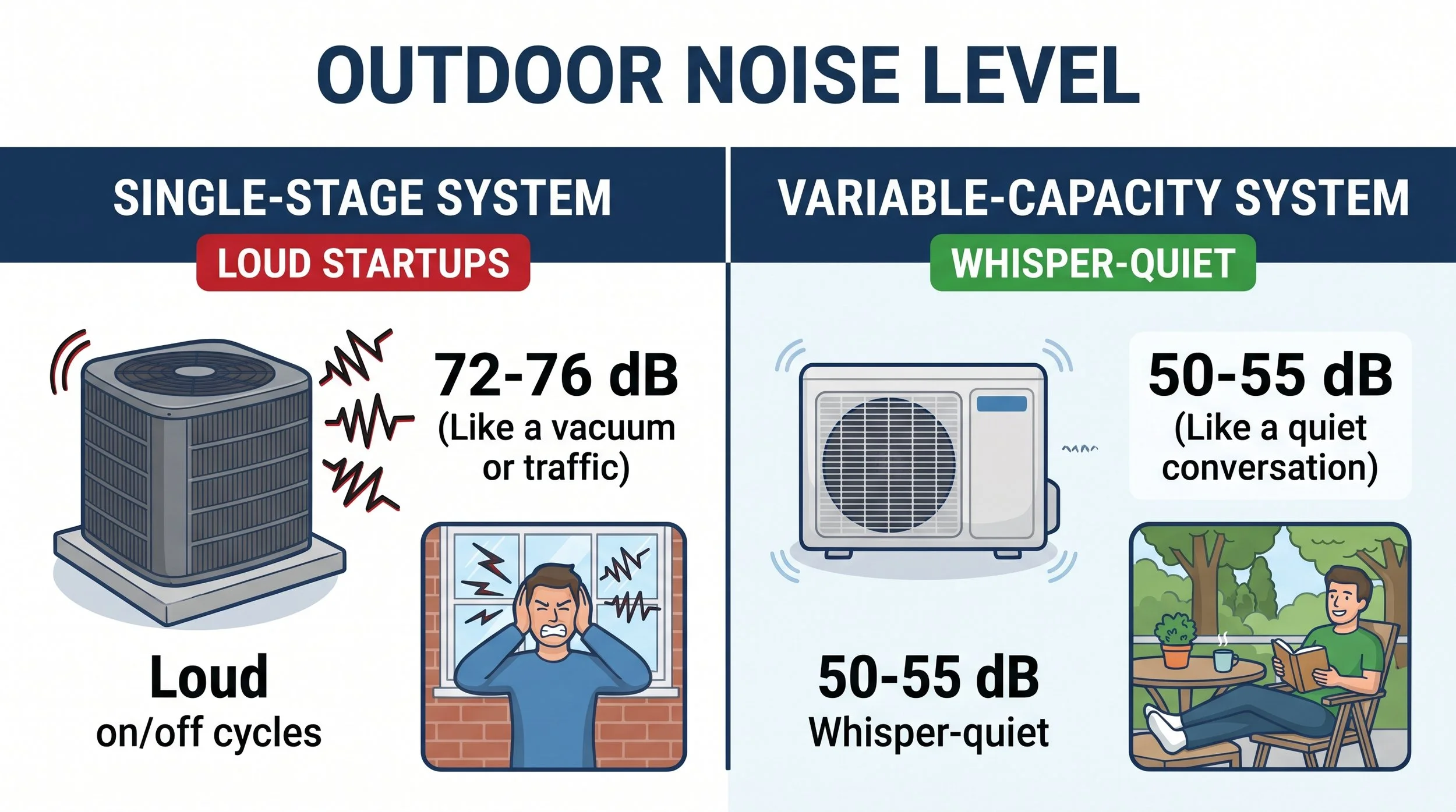
Whisper-Quiet Operation: Without the loud jolt of a compressor slamming on and off, both your indoor air handler and outdoor condenser run noticeably quieter—especially at night.
Smart Thermostat Control: Modern variable-speed equipment pairs seamlessly with smart and communicating thermostats. You get effortless scheduling and remote adjustments right from your phone, while the system fine-tunes its own speed in the background to manage both temperature and humidity.
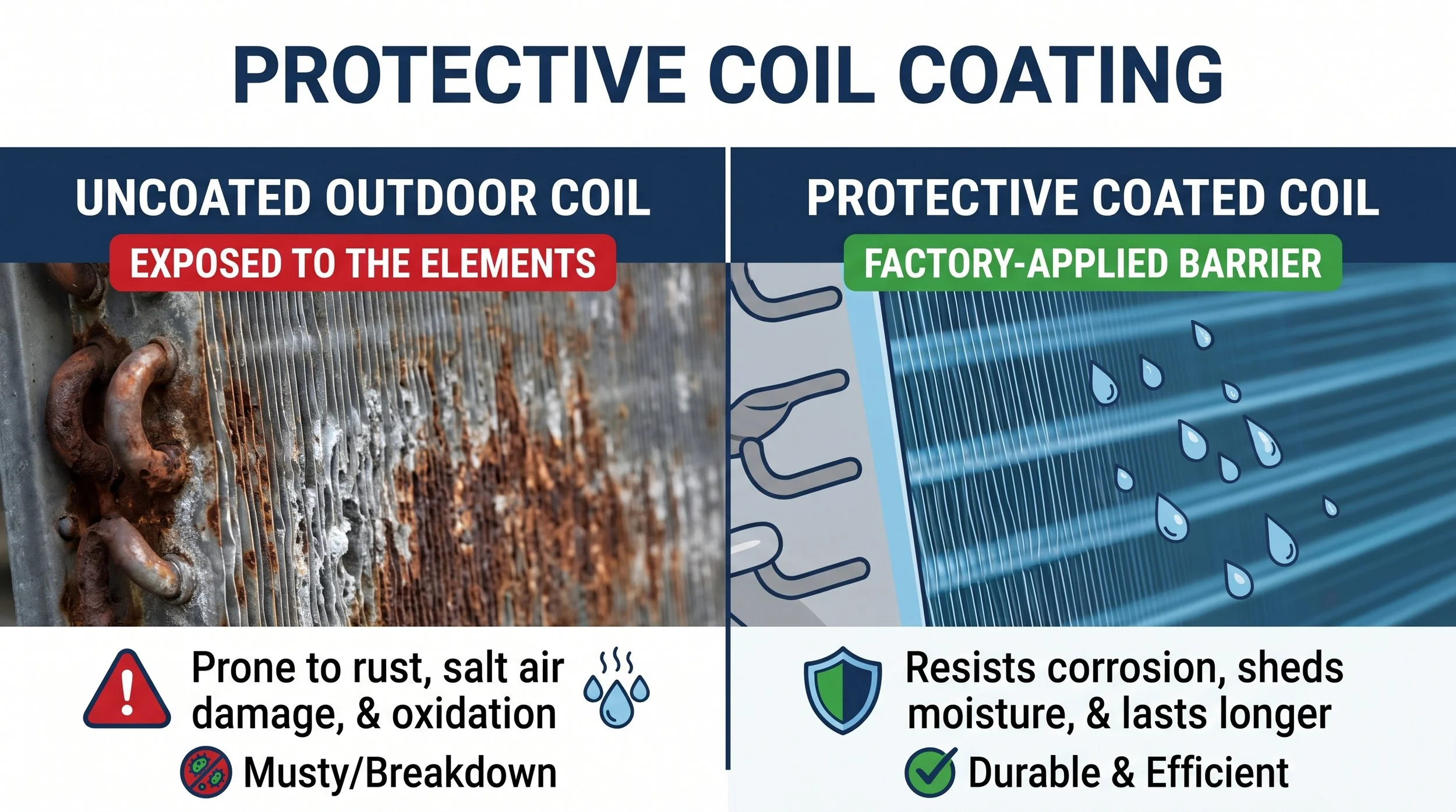
Protective Anti-Corrosive Coil Coatings: We install variable-speed systems featuring factory-applied, protective coil coatings designed to resist oxidation, moisture buildup, and everyday outdoor wear. Protecting the coil fins helps prevent premature breakdown, sheds condensation and debris more effectively, and keeps heat transfer efficient year after year.
Single-Stage vs. Two-Stage vs. Variable-Speed
Single-Stage
Operating Speed: 100% only (On / Off)
Temperature Control: Noticeable swings
Humidity Control: Basic (can feel clammy)
Energy Efficiency: Standard
Noise Level: Loudest startups
Thermostat: Basic on/off cycling
Investment: Lowest upfront
Two-Stage
Operating Speed: High (100%) & Low (~65%)
Temperature Control: Better stability
Humidity Control: Improved moisture removal
Energy Efficiency: High
Noise Level: Quieter on low stage
Thermostat: Standard 2-stage control
Investment: Mid-range
Variable-Speed (Inverter)
Operating Speed: Continuously adjusts (~25%–100%)
Temperature Control: Most even, precise comfort
Humidity Control: Best latent load & moisture removal
Energy Efficiency: Highest
Noise Level: Quietest overall operation
Thermostat: Advanced smart & communicating control
Investment: Highest upfront, lowest operating
📞 Need Immediate Service? Call (912) 242-2721
Is Variable Capacity Right for Your Home?
A variable-speed heat pump or air conditioner isn't mandatory for every budget, and a standard single-stage unit is still a solid workhorse. However, variable-speed equipment is worth a serious look if:
Your current HVAC system is over 10 years old and you plan to stay in your home for the next several years.
Your house feels sticky or clammy in the summer even when the AC is running.
You have a two-story home or rooms that never seem to stay the same temperature as the hallway thermostat.
You want modern smart thermostat control without sacrificing system efficiency.
Your outdoor unit sits right outside a bedroom window, patio, or living area where noise matters.
You want durable, coated coil protection and top-tier energy efficiency built for long-term ownership.
Frequently Asked Questions
What is latent load, and why does my house feel clammy when the AC is on? Latent load is the moisture (humidity) trapped in your indoor air. If an older single-stage AC cools the room down too quickly and shuts off, it lowers the temperature without running long enough to pull that moisture out—leaving the air feeling cold and clammy. Variable-speed systems run longer at lower speeds to steadily remove moisture and keep your home feeling crisp.
What should the relative humidity be inside my home? For optimal comfort and home protection, indoor relative humidity should stay between 45% and 55%. Once indoor humidity rises above 65%, the risk of mold and microbial growth increases significantly.
Are variable-speed HVAC systems worth the extra upfront cost? If you plan on staying in your home long-term, yes. Between lower monthly utility bills, quieter daily operation, better humidity control, and added durability, most homeowners find the upgrade pays off over the life of the system.
Do I need a special thermostat for a variable-speed system? Many variable-speed systems work best with a matching communicating smart thermostat that unlocks full precision control over speed and humidity, though select models can also pair with popular smart 24V thermostats. We'll walk you through the best control option for your setup during your estimate.
Why do protective coil coatings matter on an HVAC system? Your system's coils do the heavy lifting of moving heat in and out of your home, and they are constantly exposed to moisture, rain, pollen, and outdoor elements. A factory-applied anti-corrosive coating shields the fins from rust and pitting, helping the system maintain its rated efficiency and extending equipment lifespan.
Can I replace my old single-stage unit with a variable-speed system? In most homes, yes. During an in-home evaluation, we inspect your existing ductwork, electrical setup, and layout to make sure your home can take full advantage of a variable-speed system before recommending it.
Ready to Compare Your Options?
Not sure whether a single-stage, two-stage, or variable-speed system makes the most sense for your home and budget? Atlas HVAC is licensed and insured, serving homeowners throughout Glynn County with straightforward advice and no-pressure estimates.
Phone: (912) 242-2721
Hours: Monday – Sunday, 8:00 AM – 8:00 PM
Service Area: Glynn County, GA (Brunswick, St. Simons Island, Jekyll Island, and surrounding communities)
Call (912) 242-2721 today to talk through your replacement options.